Anthropic lost $42B last year. Why is it worth over $1 trillion?
The Claude maker listed on Nasdaq this week. Here's what its IPO filing says about revenue, the $42B loss, compute costs and the risks, explained simply.
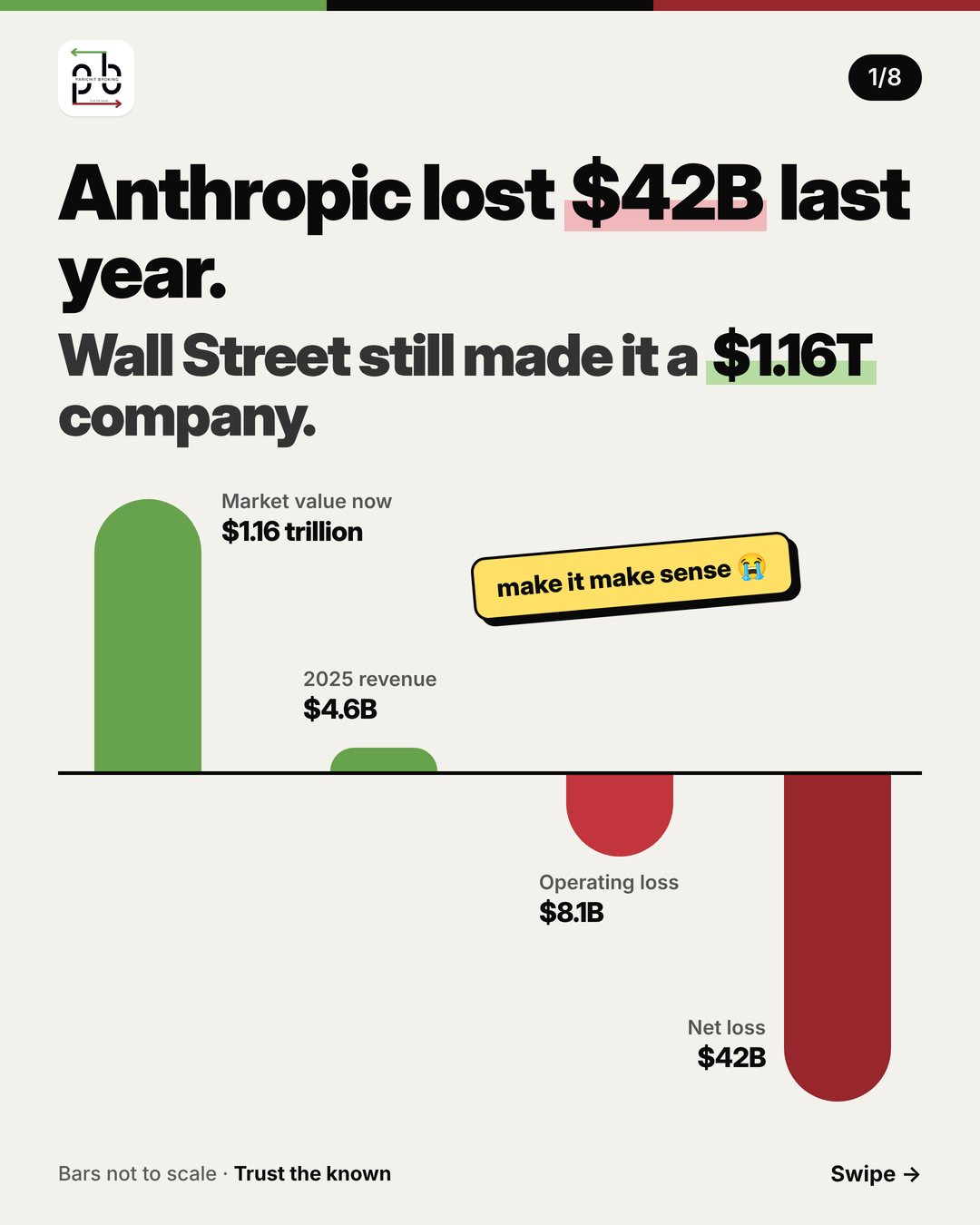
Anthropic, the company behind the Claude AI assistant, started trading on Nasdaq this week under the ticker ANT. Its filing showed a net loss of about $42 billion for 2025. Yet by the end of its second trading day, the market valued it at roughly $1.16 trillion. Here's how both things can be true.
The growth story
Revenue went from $41 million in 2023 to $386 million in 2024, and then to $4.59 billion in 2025, roughly 12 times in one year. In the first six months of 2026 it reached about $16.3 billion, more than all of 2025.
Why the $42B loss looks worse than it is
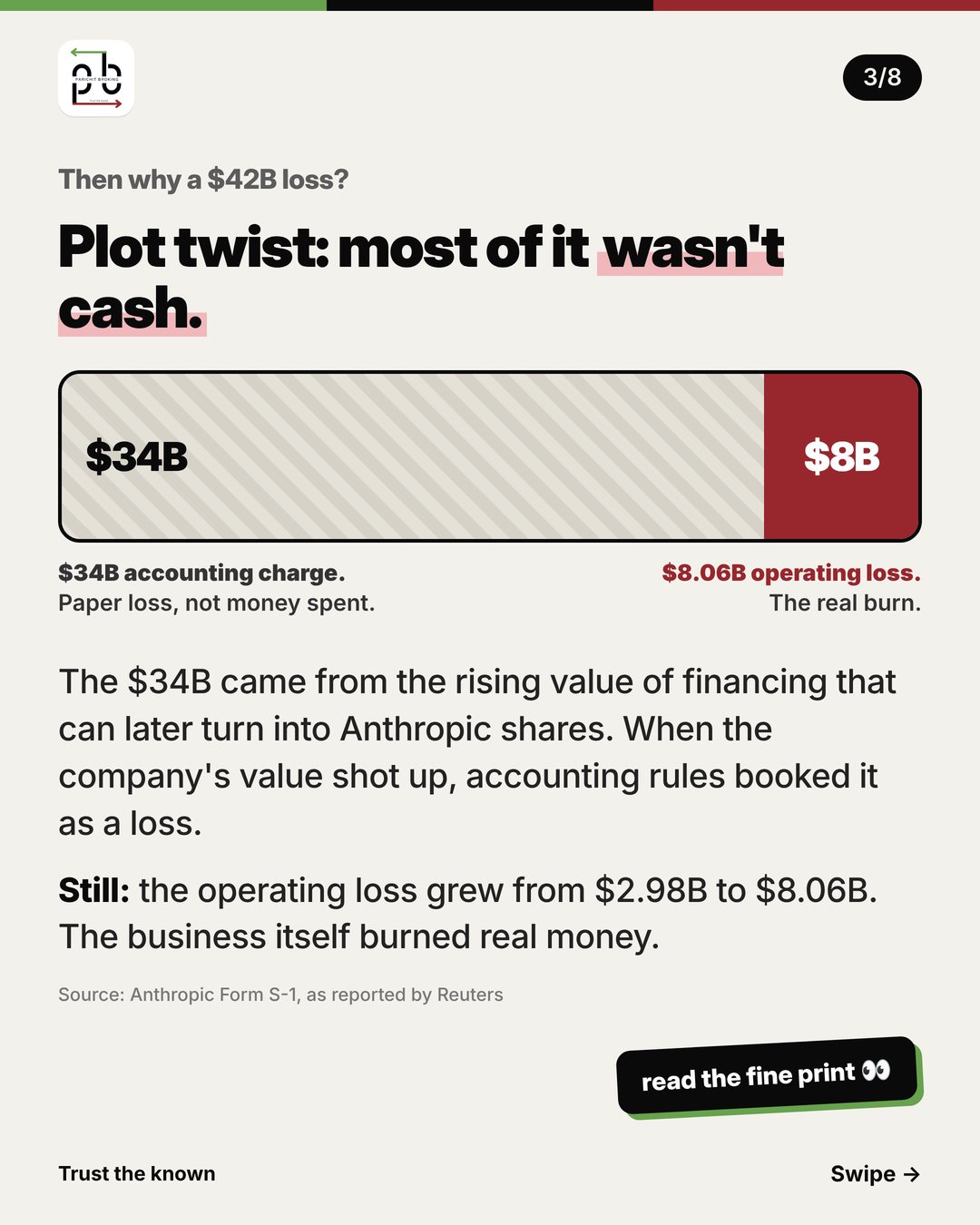
About $34 billion of the loss was an accounting charge. Anthropic had raised money through instruments that can later turn into shares. As the company's value rose, the estimated value of those instruments rose too, and accounting rules record that increase as a loss. No cash left the business for it.
The operating loss, which leaves that charge out, was $8.06 billion, up from $2.98 billion in 2024. That part is real money spent running the company.
Where the money goes
Computing power is the biggest cost. Anthropic spent $7.33 billion on compute and infrastructure in 2025, about 58% of its $12.65 billion in operating expenses, and about 1.6 times its revenue. The filing also lists roughly $518 billion in future cloud, compute and infrastructure commitments.
Green flags and red flags
- revenue grew about 14x in the first half of 2026 compared with a year earlier.
- the operating loss narrowed to $693 million in the first half of 2026, from $2.14 billion a year earlier.
- $20.28 billion in cash and short-term investments at the end of 2025.
- two customers made up about 24% of 2025 revenue.
- many large customers are not locked into long-term contracts.
- about $518 billion in commitments, in a race against well-funded rivals.
IPO week
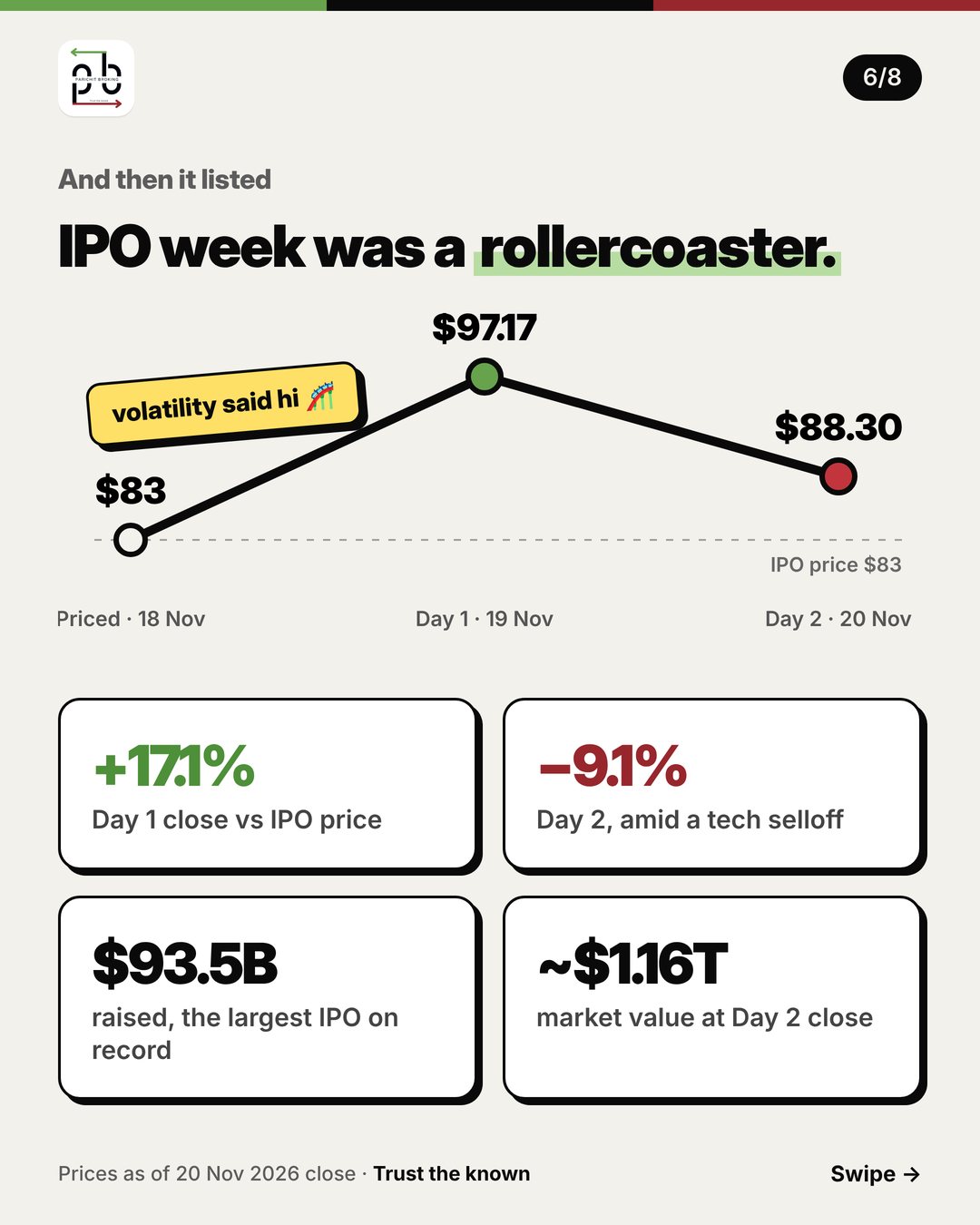
The shares were priced at $83, above the marketed range of $70–78, raising about $93.5 billion including the over-allotment, the largest IPO on record. The stock closed at $97.17 on day one (up about 17%) and $88.30 on day two (down 9.1% on the day, amid a tech selloff).
What to take away
Fast growth and a big brand don't make a stock cheap. Before buying into any hot IPO, look at four things: is revenue growing, how much cash is it burning, does it depend on a few customers, and what price are you paying for all of that.
Can Indians buy US stocks? Yes. Resident Indians can invest abroad under RBI's Liberalised Remittance Scheme, up to US$250,000 per financial year. Currency, tax and TCS rules apply.
Want to understand a stock before you buy it?
Talk to a Parichit RM in Lucknow. No jargon, no tips, just the numbers.
Sources
For information and education only; not a recommendation to buy, sell or hold any security. Figures are from company filings and news reports as of the date above, and prices change constantly. Past performance is not indicative of future results. Investments in the securities market are subject to market risks; read all related documents carefully before investing. Company names are trademarks of their owners; no affiliation is implied.